B3 – a caring librarian for the body's cellular health.

Updated: Jan 26
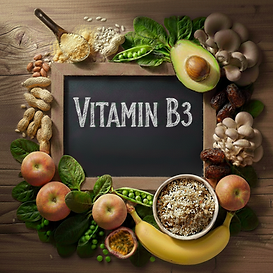
Think of your body as a vast, ancient library, where Vitamin B3 (Niacin) isn't the books or the building itself, it is the librarian. It is the steady hand that repairs torn pages of your DNA, the curator that organizes the flow of information between cells, and the energy that keeps the lights on so the whole system can function. Without this "architect," the structure remains, but the wisdom and vitality inside crumble.
At a cellular level, Niacin is the primary building block for a molecule called NAD. Lately we could say that science has become increasingly obsessed with this molecule because it acts as a "cellular fountain of youth." It’s responsible for more than 400 chemical reactions, most notably the ones that fix broken DNA. That means when you have enough B3, your body is effectively and constantly "editing" its own blueprint, correcting the minor errors that lead to aging and disease.
Beyond the deep cellular work, Niacin acts as a powerful guardian for your brain and metabolism. Recent clinical trials have shown that B3 helps clear out the biological "clutter" that causes brain fog, essentially acting as a cognitive air filter. It also plays a key role in balancing your internal chemistry—raising "good" cholesterol and helping your liver process fats more efficiently.
Let's get back to our beginning scenario. When the librarian goes missing, the library falls into disarray. So what happens when we don't have enough of B3? A severe lack of B3 leads to a condition called Pellagra, which is often described through the "4 Ds": Dermatitis, Diarrhea, Dementia, and ultimately, Death. Therefore, it's role is crucial.
It often starts on the surface. Your skin—your body’s first line of defense—begins to weaken, developing rough, sun-sensitive rashes that look like raw, weathered leather. Internally, the "dementia" phase isn't just memory loss; it’s a total breakdown of mental harmony, leading to confusion, deep fatigue, and a sense of being lost in your own mind. Because every organ depends on Niacin to transform food into life, a deficiency feels like a slow-motion power failure across the entire body.
As usual the plant kingdom is rich with B3, often packaged with fiber and healthy fats that help your body absorb it more effectively. In other words, no need for animal exploitation and cruelty.
Fortified nutritional yeast serves as a primary cornerstone, offering a robust supply of B3 in a highly concentrated form. If you're not allergic to peanuts, then together with peanut butter these are remarkably nutrient-dense, as well as sunflower, hemp, and chia seeds, which are easy to add into a daily routine. If you like mushrooms then include some portobello, oyster, and crimini varieties. Avocados, green peas, and potatoes offer fresh ways to diversify your B3 intake. Whole grains like rice, quinoa, wild rice, and whole-wheat products provide a steady, slow-release supply of nutrients. Add some broccoli, bell peppers and tomato to your salad, and if you are fruit lover, then reach for bananas, passion fruit, guava, peaches or nectarines. By incorporating additional sources such as leafy greens, dates, and legumes, one can ensure that the "cellular library" remains perfectly maintained from morning until evening.
As a sum up I must admit I didn't know that B3 is so important and have such an impact on health and well being, before doing research on it for this post. Don't get me wrong I knew we need it and it is essential, but now I can see how much good it does in our library (body). So make sure to hire and appreciate this librarian every day. Good there are many vegan sources in many varieties, which makes it easier to include B3 in my daily intake.
As always thanks for reading and sending you all warm hugs from here :)
P.S. If you know any other good vegan sources of B3 or know any good recipe rich in this nutrient, then go ahead and share with us in the comments ;)
And ofc infographic:


Comments